
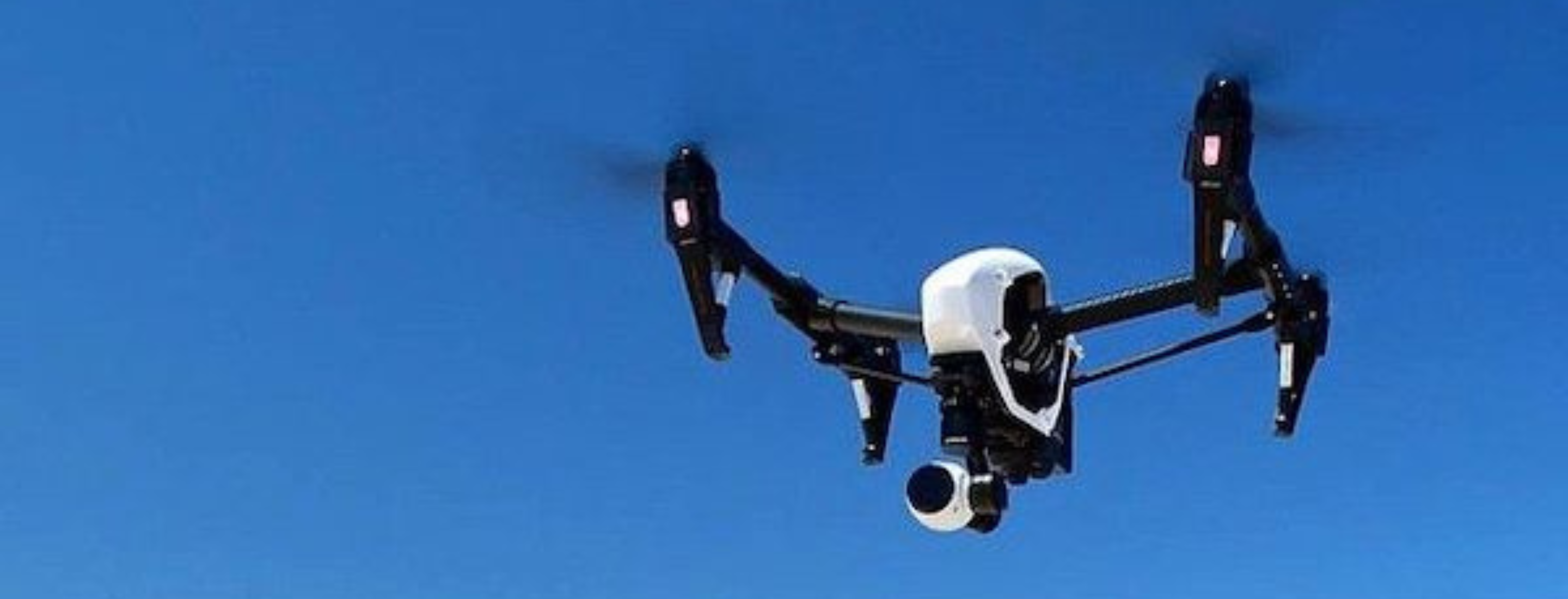
The comment period on OPRD's draft drone use laws is open now until February 15! Read on for more information on how you can provide feedback.
Drones have become a polarizing topic in recent years, not only on Oregon’s beaches, but in natural and recreational spaces around the globe. They’ve become more affordable, easier to operate, and are enticing in the age of social media, enabling just about anyone with $100 to get their hands on this technology.
Before the 2000s, RC airplanes and Unmanned Aerial Vehicles – otherwise known as UAVs or drones – were expensive, required expert skill, and often line of sight, to operate, and had short battery life or fuel capacity. This limited where they were used and by whom. Throughout the aughts, advancements in GPS technology, battery life, and the addition of digital cameras, mirroring advancements in smartphone technology, made drones much more accessible to the average person. Their popularity exploded, and so too did their impact.
Drones can now fly over great distances, sometimes miles away from their operator. This technology has become a great scientific tool – for example, allowing researchers to efficiently collect data and imaging in hard to reach areas, enhance detection of marine debris, and detect poachers using thermal imaging. We see drones being used in agriculture, search and rescue, and disaster assessment. And perhaps most simply, high quality digital cameras allow us to see beautiful shots of places we love from a unique perspective.
Flying Too Close to the Sun
However, the dark side of drone usage has become clear, and we now seek to put limitations on this technological wild west. According to the FAA, there are currently 837,513 drones registered in the US. Drones that weigh less than 0.55 lbs do not need to be registered, and surely thousands more drone operators simply do not register their drones. These numbers are only set to increase. There is no required training, and drone pilots must seek out regulations. Many do not. You can see the result of this on the (quite long) wikipedia list of UAV incidents and near misses. It’s clear that there is a growing number of people using drones irresponsibly, inappropriately, and downright harmfully.
That buzzing sound has become ubiquitous to recreators, disturbing the soundscape and natural feel of outdoor spaces, not to mention privacy. However, this is nothing compared to the horrific impacts that drones have had on wildlife. Following an incident in which a drone scattered bighorn sheep in Zion, separating calves from their mothers, drones were banned in all National Parks. There was that devastating viral footage of a brown bear mother and cub being frightened down a snowy hillside in Russia by a drone that continued to harass them. Perhaps most staggering is the 2021 case of the Bolsa Chica Ecological Reserve, where two drone crashes within 24 hours caused a colony of 3,000 elegant terns to abandon their nests, leaving behind 1,500 to 2,000 eggs. While these are only a few examples, research clearly shows that drones, operated irresponsibly, are harmful to wildlife.
As with all new technology, there is a learning curve. We must now seek to find a balance which will provide recreational drone users with clear guidelines and areas that they can recreate without posing a threat to wildlife.
Lend Your Voice
In Oregon, we are tackling this issue head on. A quick history: in 2021, the Oregon legislature directed Oregon Parks and Recreation Department (OPRD) to develop rules for drone takeoff and landing on lands they manage, including the entire ocean shore. The agency formed a workgroup to develop criteria on where drone use should be prohibited (red zones), allowed conditionally (yellow zones) and allowed all the time (green zones). Now OPRD has developed draft rules to guide how they will regulate drone use on their lands. You can learn more about OPRD’s drone process here. It’s also important to mention here that these regulations only apply to takeoff and landing locations, not the air itself. The FAA has separate regulations for drones while airborne.
OPRD is now accepting public feedback on the proposed drone takeoff and landing rules in State Parks and on the ocean shore. Please lend your voice and urge OPRD to strengthen these rules and include a strong “roll out” plan to help best protect wildlife and beach users from drone disturbances (see talking points below).
Public comments on the proposed rule changes will be accepted until 5 p.m. on February 15 and can be submitted:
Online: https://www.oregon.gov/oprd/PRP/Pages/PRP-Rule-2025-Drones-Take-off-and-Landing.aspx
Email: OPRD.PublicComment@oprd.oregon.gov
Snail Mail: Oregon Parks and Recreation Department, Attn: Robert Ellison, 725 Summer St. NE, Suite C, Salem, OR 97301
Key Talking Points
- We applaud that the new rules will provide State Park managers to meaningfully regulate drone usage in state parks and on the ocean shore
- Drones disturb birds and wildlife, and are especially harmful to nesting birds. Accordingly, OPRD must take a cautious approach to where and in what season it allows drone use.
- The vast majority of Oregonians and out of state visitors to our state parks and beaches are not drone users, yet drone use impacts the soundscape and natural feel of many wild spaces. Accordingly, OPRD should carefully select and limit the areas where drones are allowed, so that their impact to recreators and sensitive birds and wildlife are minimized.
- We appreciate that the draft rules prohibit drone use in endangered Snowy Plover management areas. Following suit, we suggest that the rules prohibit drone use in all Rocky Habitat Management Areas, Marine Reserves, and Marine Protected Areas.
- We recommend OPRD adopt no take off and landing rules in a 0.5mi buffer in OPRD managed land adjacent to all U.S. Fish and Wildlife Service refuge and other federal lands designated to protect wildlife populations and habitats.
We applaud that the OPRD is taking a proactive approach to manage drones in our State Parks and ocean shores. While we believe that tighter regulations are an important step, it’s clear that uneducated and irresponsible drone operators will inevitably break the rules, so increased public education will be a necessary component.

By Kaia Hazard
After earning a bachelor's degree in Environmental Studies from the University of Oregon, Kaia gained professional experience working in coastal wildlife interpretation and watershed conservation. Since joining Surfrider as Oregon Regional Manager, her favorite part of the role is connecting with dedicated activists across the entire state that have a shared passion to protect Oregon's undeveloped, wild coastline. In her free time she loves gardening, kayaking, and exploring the diverse tidepools near her home.