
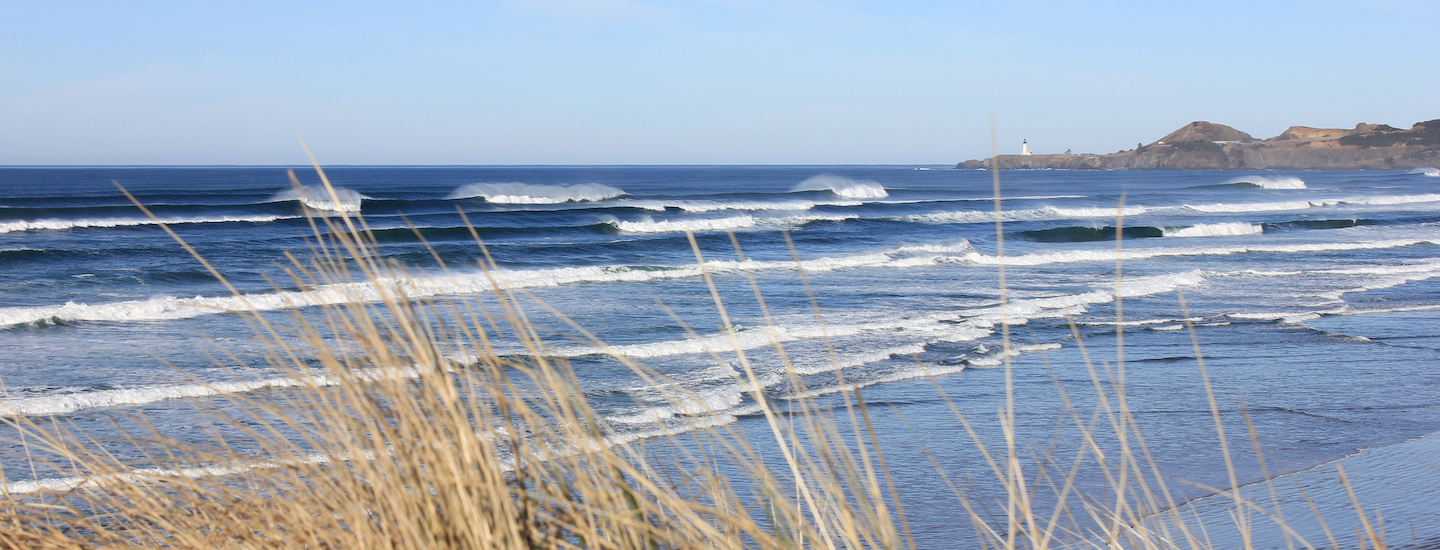
This week Governor Tina Kotek signed the second of two new laws aimed at protecting and better managing Oregon's public beaches. Climate change, coastal hazards and traditional responses to erosion such as rock armoring and seawalls are shrinking Oregon's beaches and demanding an evolved approach to management. Both bills further affirm Oregon's intention to better protect public beaches and further instruct land use agencies to better inform nature-based solutions for coastal erosion and evolve Oregon's shoreline permitting process. Such measures may help slow erosion, provide better coastal resilience while continuing to support public recreation on beaches.
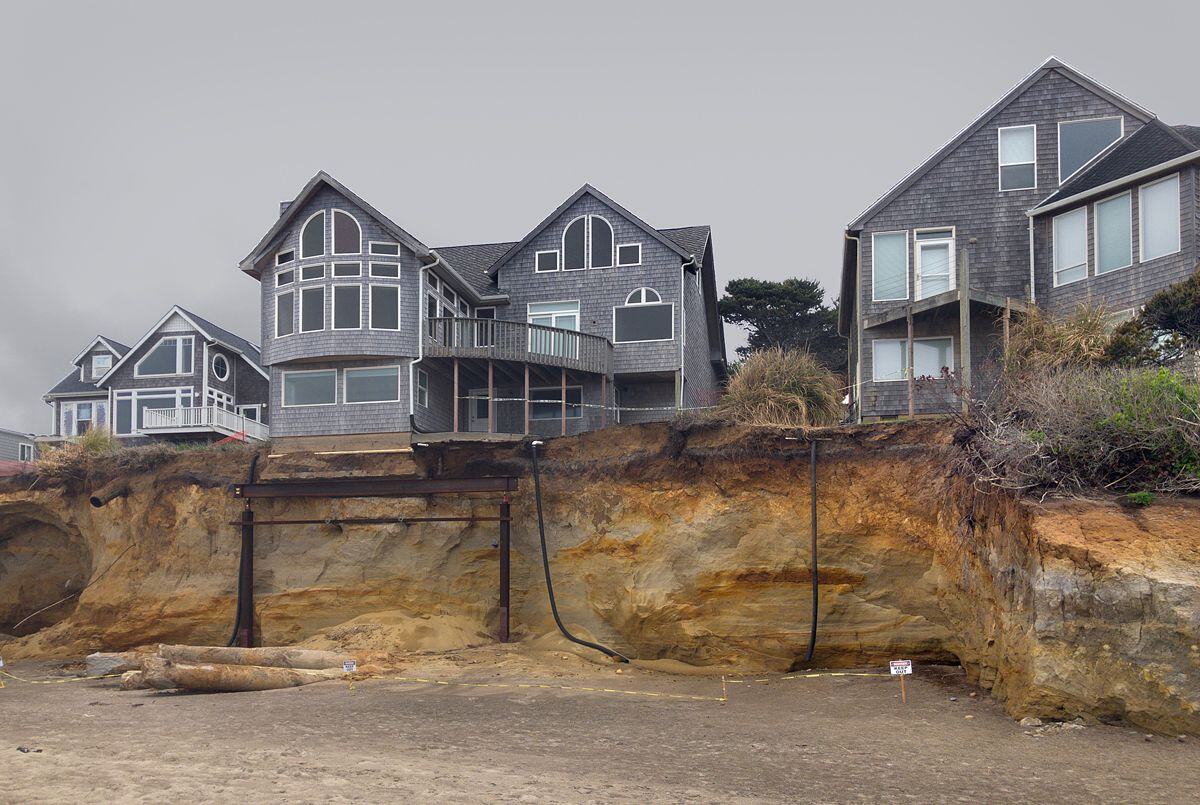
Failed structures such as this one in the Lincoln Beach area of the central coast are becoming more common and requiring a rethinking of preserving beaches and erosion of coastal development.
Surfrider Foundation tracked and engaged in both pieces of legislation (HB 2925 & SB 504) during the 2025 Oregon legislative session - offering testimony from our coastal chapters during legislative public hearings and working directly with the bill's sponsors and state agencies throughout the session on bill language. Both bills were opportunities for our chapters to advance our Oregon Beaches Forever campaign, where improving shoreline management and better directing nature-based solutions are key strategies. Thus these bills' collective efforts during the legislative session became known as our Nature First for Oregon's Beaches Campaign.
The first bill (HB 2925) was introduced at the request of the Governor's office and directs Oregon Parks and Recreation (OPRD) to evolve and update the state's permitting process along our beaches and shoreline. To better protect beaches and public access along the shore, Oregon needs a forward thinking system that better addresses a range of solutions and responses to erosion. The bill directs OPRD rulemaking to do just that. It supports the agency's ability to adapt permitting along the ocean shore to manage our changing coastlines and preserve our public beaches.

A bit further north, the entire stretch of Salishan beach is experiencing failed rip rap and rock armoring, losing public access points and even entire stretches of walkable beach.
The second bill (SB 504) was introduced by Senator Brock-Smith from the south coast of Oregon and proposed the idea of "bioengineering" coastal solutions for erosion. Early the bill was actually of concern to Surfrider given some of the choice terminology, challenges with land use consistency and what appeared to be potential loopholes for structural development. Following outreach to the sponsor and the bill's proponents, we had the opportunity work more collaboratively and on common ground to better encourage the state to define natural "non-structural" solutions which may provide better coastal resilience while nourishing and protecting beaches. We are extremely pleased and supportive of the final bill's language with better aligns criteria for public access, ecological and wildlife considerations while including the "non-structural" language that compliments statewide planning Goals 17 and 18.
Traditional shoreline management responses to coastal hazards such as erosion on Oregon's beaches has relied heavily on rock armoring. These hard structures of piled rock known as rip rap and seawalls temporarily protect private property behind the shore, but are furthering erosion, shrinking and eventual loss of Oregon's public beaches. The solution is to incorporate more dynamic "nature-based" shoreline management methods such as natural cobble revetments, native dune restoration and natural berms that help nourish the beaches sand supply. While Oregon's land use goals encourage these types of "non-structural " methods over "structural" solutions, even limiting many shoreline areas where it is allowed. The problem is there is little guidance, local rules or direction on these more nature-based strategies thus rarely considered as an alternative or even implemented in areas where rip rap is (and even isn't) allowed.
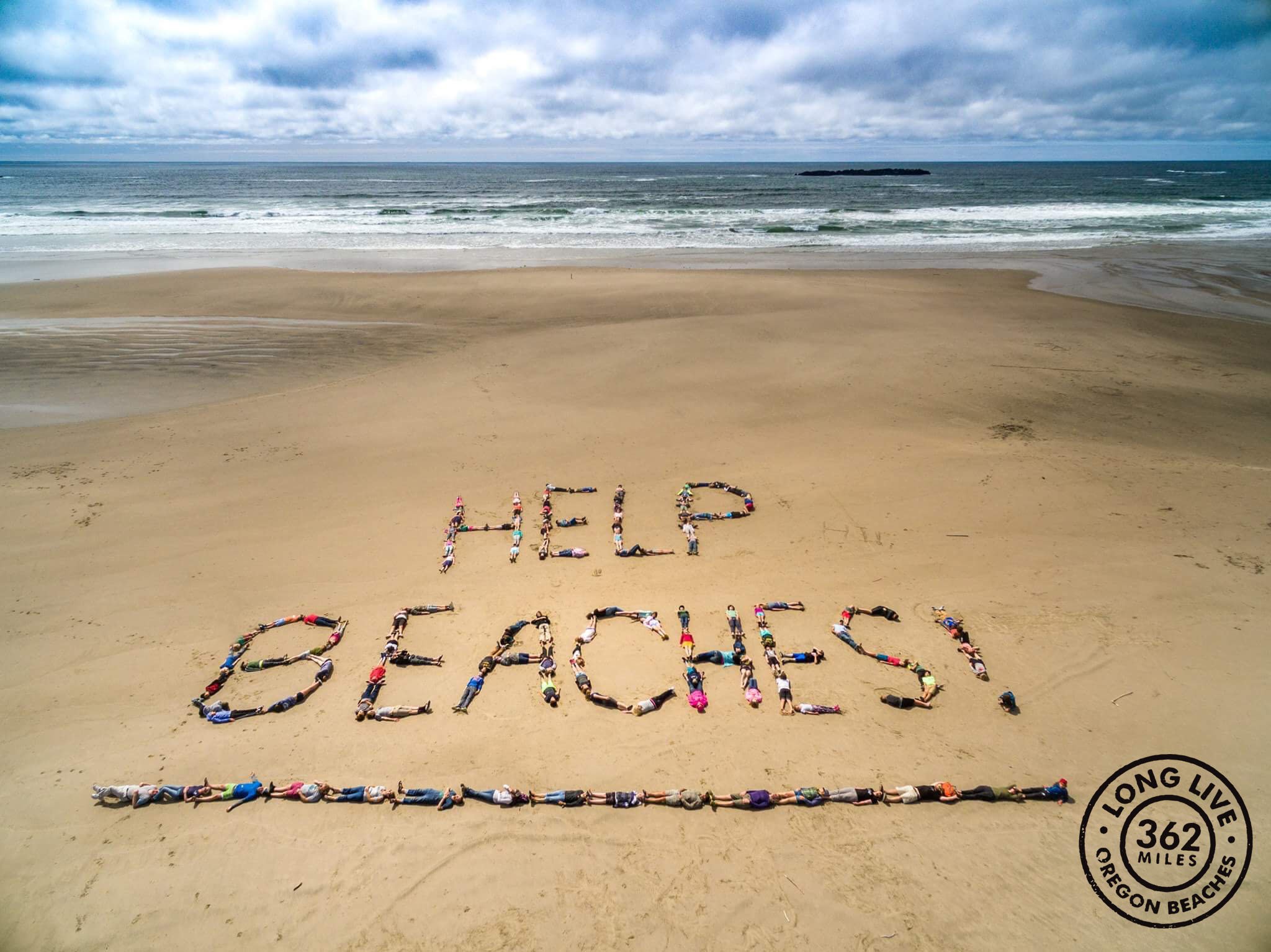
Student's from a middle school in Bend line Moolack Beach north of Newport to raise awareness of Oregon's public beach legacy and the support it needs, circa 2017. Today this broad and beautiful stretch of beach may be entirely threatened by a newly proposed land use exception to protect Hwy 101 in this area.
More and more private property owners and even public resource managers such as the Oregon Department of Transportation are seeking exceptions to land use law to permit rock armoring, rip rap and seawalls where not allowed, rather than seeking alternative solutions. In many areas, this can and will mean the complete sacrifice of public beaches, access to the shoreline and more hazardous beach conditions for public safety. If Oregon's Beaches are to be forever, we must advocate for more nature-based solutions and promote pathways for these alternatives. This is a key strategy of our Oregon Beaches Forever campaign here in Oregon.
Surfrider Foundation is thrilled to see these two pieces of legislation advance to better address these key issues in keeping Oregon's Beaches Forever.
 As a founding member of the Newport, OR Chapter, Charlie has greatly advanced Surfrider's mission through ocean conservation as the Oregon Policy Manager. With a BS in Marine Biology and as a member of the Oregon Ocean Policy Advisory Council, Charlie’s ties to the ocean reach far and wide.